Side Quest Psychotherapy: The Story Behind the Name

You sit down to do your taxes—schedule cleared, documents ready, coffee in hand. Twenty minutes later, you’re reorganizing computer files. Then you’re making espresso. Somehow, you end up scrubbing under the fridge’s crisper drawer.
Sound familiar?
If you have a neurodivergent brain—especially one shaped by autism, ADHD, OCD, or trauma—this kind of detour probably isn’t new. It’s not laziness. It’s not self-sabotage. It’s your nervous system doing something purposeful.
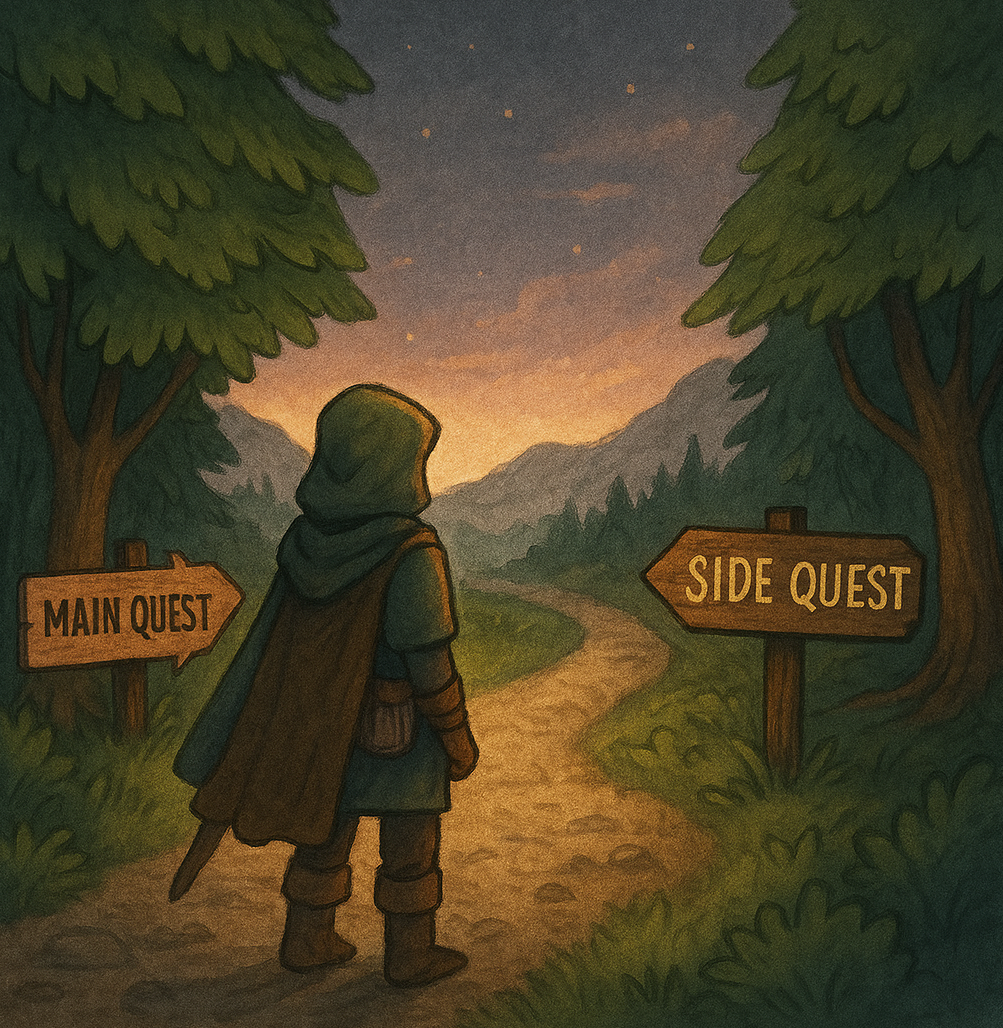
I call it a side quest. And yes, I named my entire therapy practice after it.
What Is a Side Quest? (And Why It Matters for Neurodivergent Brains)
IIn gaming, a side quest is an optional mission—outside the main storyline. It’s nonlinear, unexpected, and sometimes seems unrelated to the primary goal. But it’s often where the character grows: gaining skills, allies, insight, or essential tools.
In real life, a side quest might look like:
- Rearranging your bookshelf instead of responding to a text
- Watching hours of mushroom foraging videos when you meant to fold laundry
- Researching a niche fandom instead of finishing homework
To outsiders, this can look like procrastination. Internally, it’s often nervous system regulation, curiosity, or a search for safety and control.
For neurodivergent people, these detours are not random. They are adaptive.
Monotropism and Task Switching in Autism & ADHD
Monotropism, a theory often used to describe autistic cognition, proposes that some brains allocate attention in a highly focused, single-channel manner. This depth of focus can be a significant strength, yet it also makes rapid task-switching neurologically costly.
When the nervous system shifts into a freeze response, initiating a complex or open-ended task can feel unreachable. In those moments, the brain often steers toward activities that are predictable, tactile, contained, and repetitive—such as untangling cables, scrubbing a stovetop, or sorting socks while listening to the same song.
This pattern has nothing to do with productivity. It is about regulation and re-entry into a tolerable window of engagement.
When Side Quests Turn Into Shame Spirals
For many neurodivergent adults, the boundary between main quests and side quests is blurry.
What begins as “checking the weather” becomes a two-hour deep dive into climate models and emergency preparedness. Then comes the shame spiral:
- Why can’t I just do the thing?
- What if I’m avoiding everything important?
- What if I’ve lost the plot?
For those with OCD or perfectionistic wiring, this can include obsessional doubt:
- What if I’m focusing on the wrong task?
- What if my internal compass isn’t trustworthy?
Health anxiety may lead to compulsive reassurance-seeking online, increasing overwhelm rather than relief.
This is not simple distraction. It is distress shaped by nervous system threat detection.
From Productivity Shame to Sustainable Living
Let’s reframe the question.
Instead of asking: Am I being productive?
Try asking: Is this sustainable?
If your life relies on panic sprints, guilt loops, or masking your needs, that’s not a time-management issue. It’s a survival strategy.
Sometimes the side quest prepares you for the main task.
Sometimes the side quest is the main task.
Why I Named My Practice Side Quest Psychotherapy
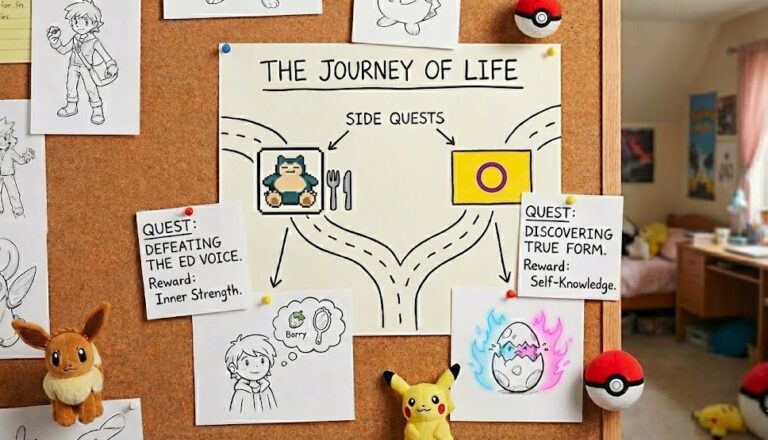
Healing—especially for neurodivergent, queer, and chronically overwhelmed people—is not linear. And professional help like therapy doesn’t follow a single storyline. It loops, detours, and meanders. What looks like procrastination may actually be your brain finding a path forward.
I named my practice Side Quest Psychotherapy to honor nonlinear healing:
- Organizing your closet instead of answering emails
- Diving into a special interest while grieving
- Learning to listen to your body after years of dissociation
Here, tangents and sensitivities aren’t obstacles—they’re data. Together, we explore what they point toward: unmet needs, protective strategies, grief, and desire. You don’t have to follow someone else’s storyline to heal. This is your quest.
Who Neurodivergent-Affirming Therapy Is For
II built Side Quest Psychotherapy for those who’ve wandered off the main path—not by accident, but because the path never fit.
This practice supports:
- Autistic and ADHD adults
- Individuals navigating eating disorder recovery
- OCD and anxiety treatment
- Trauma and nervous system dysregulation
- Late-identified neurodivergent adults
- Queer and gender-diverse clients
- Chronically ill and high-masking individuals
In this space:
- Complexity is honored—not pathologized
- You don’t have to explain why simple things feel hard
- Sensory needs and rhythms are respected
- Side quests are welcomed—not shamed
Whether you’re navigating burnout, diagnosis, transition, or doubt—you belong here.
Now Booking: Neurodivergent-Affirming Therapy in Maryland & Telehealth
🎉 Side Quest Psychotherapy will be opening June 9, 2025
- Therapy for individuals, families, and caregivers
- Adult neurodivergence evaluations
- Child & teen evaluations launching this fall
If you’ve been waiting for care that honors your wiring and your pace, now is the time.