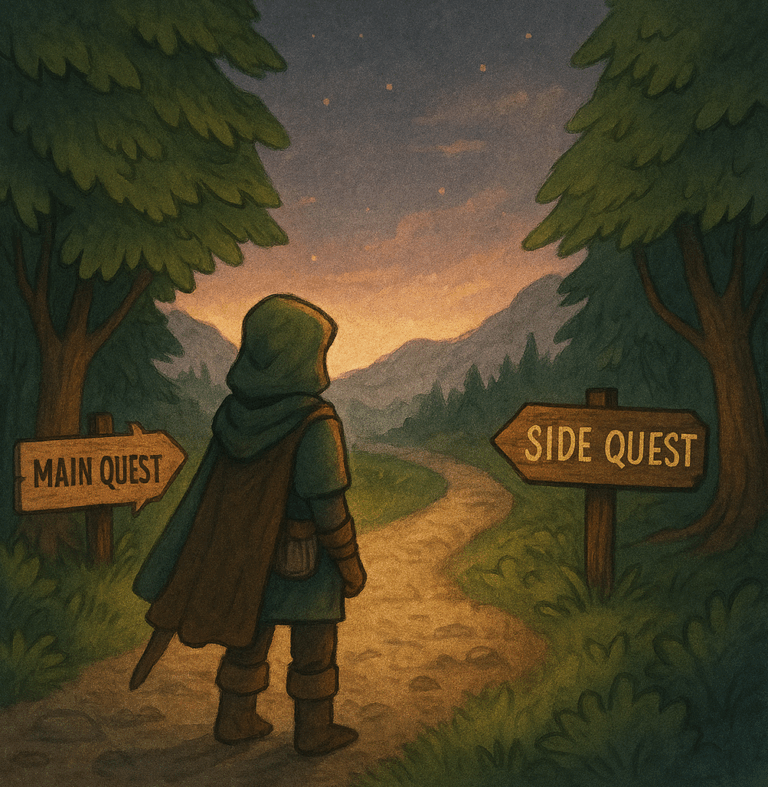
From “Too Complex” to Whole: Marissa’s Side Quest

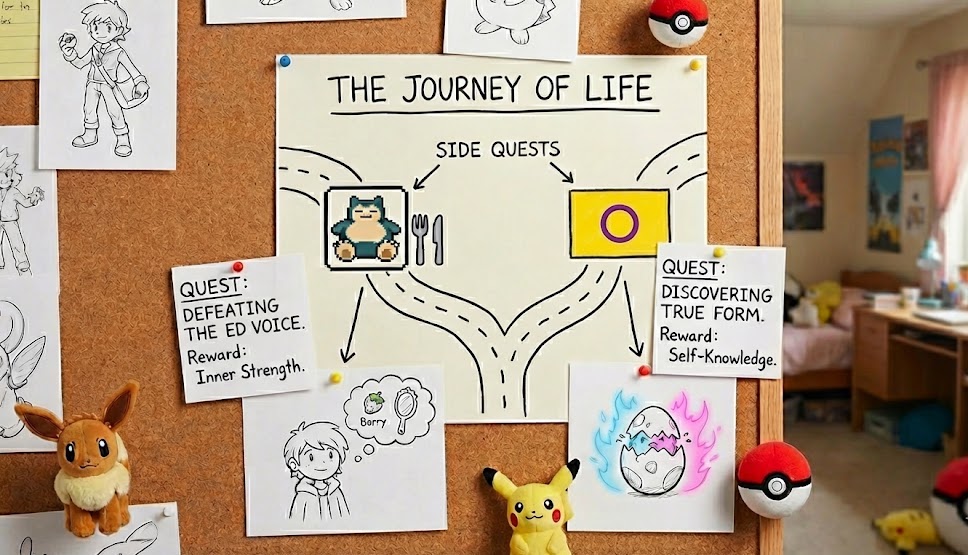
Healing isn’t a straight line; it’s a series of meaningful side quests.
Embracing the Divergent Path
As I begin my role as a Recovery Coach at Side Quest Psychotherapy, I’ve been reflecting on my own “side quests” and how they got me to where I am today.
In Pokémon (my special interest), real growth rarely comes from rushing from one gym to the next. It happens when you wander into tall grass, take unexpected detours, and face challenges you never planned for. Sometimes you encounter a Shiny or a Legendary Pokémon, rare discoveries that only happen when you step off the main path. The dark caves, long routes, and battles you feel unprepared for are where resilience is built and new strengths evolve.
My own path has been shaped by these kinds of detours. Along the way, I discovered strengths I never knew I had and gained the lived experience that now allows me to walk alongside others as they navigate recovery.
How an Eating Disorder Became My “Normal”
Nobody wakes up one day and decides to have an eating disorder.
Within a year, my life took a sharp turn when I developed an eating disorder at age 12. I didn’t choose this path. Instead, it emerged from a complex mix of biological, emotional, and social factors. Over time, it became a nonlinear reality that shaped more than a decade of my life. What began as a crisis slowly became my “normal.”
During those years of repeated hospital admissions, I was doing something the doctors didn’t always see. I was learning how to survive, one day at a time. On paper, clinical labels positioned me as “chronic,” “unmotivated,” and “treatment-resistant.” However, the system was working from the wrong assumptions. Providers treated me as if there were one standard way to heal. In reality, I am autistic, and my brain processes the world differently.
Because my neurodivergence was unknown and unsupported at the time, providers interpreted my responses as “resistance.” In truth, my nervous system was trying to survive in environments that did not meet my needs. I wasn’t refusing to heal. I was trying to exist in a world that wasn’t built for me.
Learning That My Body Was Never the Problem
I always knew that my body was different, even if I didn’t yet have the language to understand why. It wasn’t until I was hospitalized for eating disorder treatment that I was given more complete information about my intersex variation. Receiving those details in the middle of an already overwhelming experience was a lot to process. Still, it became one of the most defining side quests of my life.
From the earliest stages of my development, my biology did not follow what medicine often considers typical. In a world organized around binary ideas of sex and gender, intersex bodies are frequently described as disordered, abnormal, or in need of fixing. Carrying those messages was painful and isolating. Over time, they contributed to the development and maintenance of my eating disorder.
As a result, my eating disorder offered a sense of control over a body that had been medicalized and scrutinized. It also created distance from parts of myself that felt too complicated or exposed. In those moments, the eating disorder seemed to make me more acceptable, less “wrong,” and less visible in ways that had once felt unsafe. Now I understand that this was not control. It was a survival strategy — an attempt to manage trauma, shame, and the stress of living in a body that did not fit societal expectations.
Over time, intersex community and advocacy helped me step outside the expected biological script. Because of this, I developed a deep and personal understanding of body sovereignty and bodily autonomy. I have come to see that being different is not a flaw. It is part of human diversity. Rather than trying to “fix” myself to fit the world’s expectations, I have learned to lean into my identity and move toward a more authentic, sustainable form of healing.
Who I Work With + How I Can Help
If you have ever been told you are “weird,” “not normal,” or “too complex,” we may work well together! After years of navigating the world as an outsider, I stopped trying to “fix” myself and began leaning into the strength of being different.
As a Recovery Coach at Side Quest Psychotherapy, I am passionate about assisting, mentoring, and coaching:
- Autistic and Neurodivergent individuals navigating the intersection of sensory needs and recovery.
- Teens and adults with Eating Disorders, especially those labeled “chronic, severe, and enduring” or “treatment-resistant.”
- Parents and caregivers supporting a young person through the recovery process.
- Intersex individuals and members of the LGBTQIA+ community seeking body sovereignty.
- Folks living with persistent mental health challenges who feel the traditional road wasn’t built for them.
My approach to eating disorder recovery coaching is strictly HAES-aligned (Health at Every Size). I focus on creating a stigma-free, inclusive environment where we can develop sustainable coping strategies that honor your unique definition of healing.
At Side Quest, I also provide specialized intersex healthcare navigation and support to help you move through medical systems with autonomy and confidence.
Expert by Lived Experience + Professional Training
Before joining the Side Quest team, I earned my Eating Disorder Informed Professional (EDIP) designation, which strengthens my ability to help you access comprehensive, coordinated care.
I am currently completing my certification as an Inclusive Eating Disorder Specialist (IEDS), which focuses on:
- Weight-Inclusive Nutrition Therapy: Moving away from the BMI and toward true nourishment.
- Trauma-Informed Modalities: Understanding the “why” behind the struggle.
- Body Image and Dysmorphia: Navigating the relationship with the physical self.
- Bias and Intersectionality: Ensuring treatment is safe and inclusive for all bodies.
I’m also enrolled in a Motivational Interviewing training series for weight-inclusive providers at the Center for Body Trust and am committed to ongoing professional growth and development.
If you are navigating eating disorder recovery, supporting a loved one, or seeking affirming guidance within complex care systems, you deserve support that respects your body and your right to define healing on your own terms.
I am a Recovery Coach, not a therapist. My role is to provide mentorship, advocacy, and real-world support alongside your existing care.